 Foto: Lsimanjorang / Wikimedia Commons · CC BY-SA 4.0
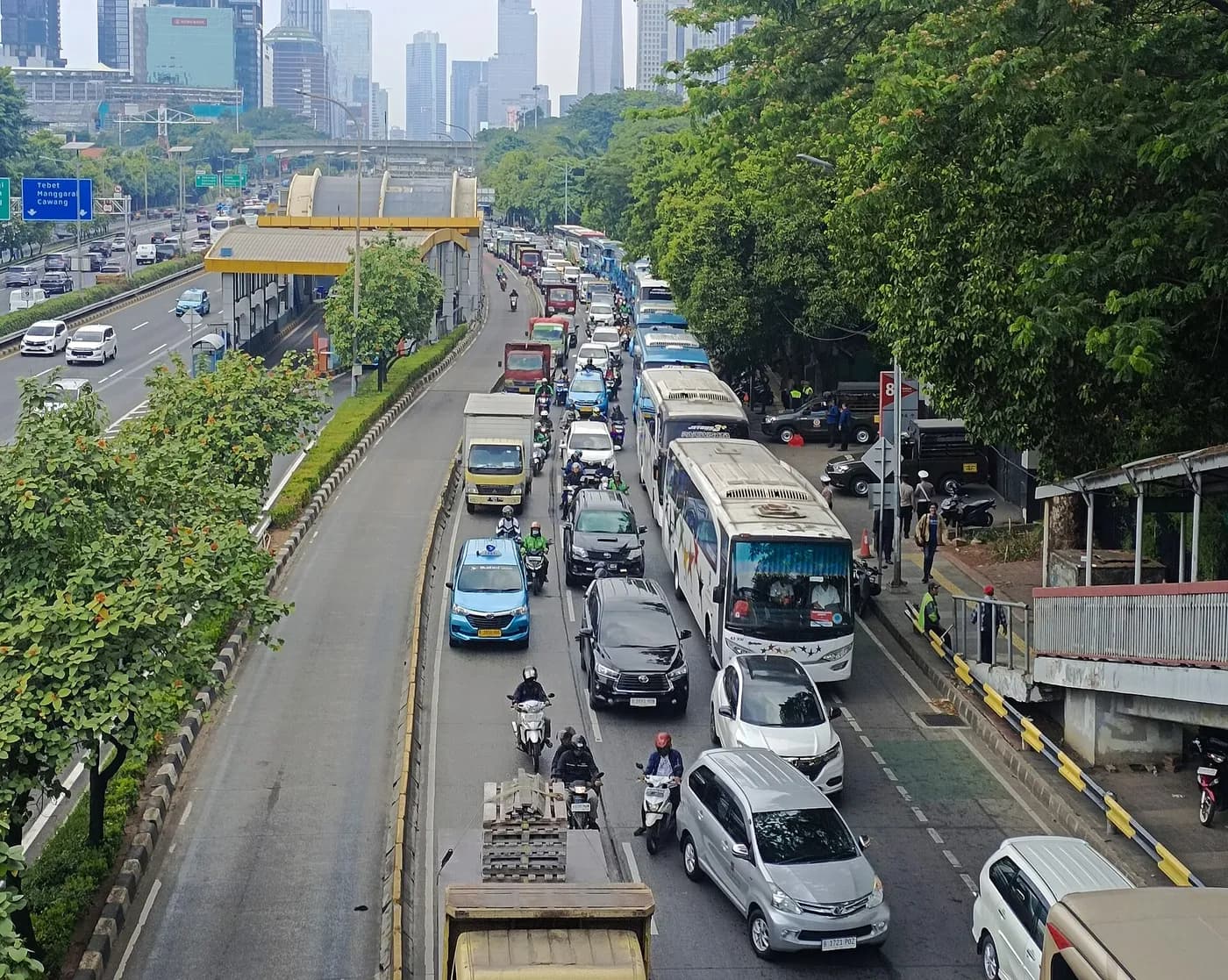
The sky can be blue while the air still poses a health risk.
A common source of harm in polluted air is fine particulate matter, known as PM2.5. These particles are much smaller than a hair. We cannot see them, but we can breathe them in. A clear sky therefore does not guarantee healthy air.
Greenpeace Indonesia has made the same point: Jakarta's blue sky does not guarantee pollution-free air. BMKG explains that skies can turn blue after rain washes pollution out of the air, but the effect does not last long.
How to check: read the ISPU value, not the sky
ISPU is Indonesia's air quality index, from 0 to 500. Higher values mean more polluted air. There are five levels. This site calculates ISPU from the 24-hour average of PM2.5.
| Level | ISPU | Meaning | Recommended action |
|---|---|---|---|
| Good | 0–50 | Very good air quality, with no negative effects on people, animals, or plants. | Very good for outdoor activities. |
| Moderate | 51–100 | Air quality remains acceptable for the health of people, animals, and plants. | Outdoor activity is still possible. |
| Unhealthy | 101–200 | Air quality that is harmful to people, animals, and plants. | Reduce prolonged outdoor physical activity. |
| Very unhealthy | 201–300 | Air quality that can increase health risks for some exposed groups. | Avoid prolonged outdoor physical activity; consider indoor activities. |
| Hazardous | di atas 300 | Air quality that can seriously harm the population and needs prompt action. | Avoid all outdoor activities. |
The meaning and action columns are translated from Indonesia's Ministry of Environment and Forestry Regulation No. 14/2020, for the general population. According to WHO, fine particles can cause heart disease, lung disease, and cancer.
“Moderate” does not necessarily mean safe
WHO recommends no more than 15 µg/m³ of PM2.5 averaged over a day, and 5 µg/m³ averaged over a year. The unit is micrograms per cubic metre of air.
Now compare that with ISPU levels:
- The Good level ends at 15.5, close to the WHO daily limit.
- The Moderate level runs from 15.5 to 55.4. The upper end is almost 4 times the WHO daily limit.
Both figures are valid but serve different purposes. ISPU is Indonesia's standard for communicating air quality. The stricter WHO limit is a health-based target. Air rated “Moderate” can therefore still exceed the WHO limit, even if it looks normal.
Jakarta and other major cities, alongside the cleanest and most polluted
Here is PM2.5 in Central Jakarta and several major cities, alongside Indonesia's cleanest and most polluted areas in the stored estimate.
Of the 10 major cities below, 9 are above the WHO daily limit (15). Central Jakarta is currently at 3.5 times that limit, even though its level is “Moderate”. Across 514 Indonesian cities and regencies, 324 exceed the limit; the mean is 23. The most polluted area, Kabupaten Kutai Kartanegara, is at 10 times the limit.
WHO recommended daily limit15 µg/m³
Kabupaten PaniaiCleanest air · Papua Tengah1.7 µg/m³ · ISPU 5 · Good
Kota DenpasarBali12 µg/m³ · ISPU 38 · Good
Kota BalikpapanKalimantan Timur16 µg/m³ · ISPU 51 · Moderate
Kota PalembangSumatera Selatan20 µg/m³ · ISPU 56 · Moderate
Kota YogyakartaDaerah Istimewa Yogyakarta22 µg/m³ · ISPU 58 · Moderate
Kota MakassarSulawesi Selatan28 µg/m³ · ISPU 66 · Moderate
Kota MedanSumatera Utara33 µg/m³ · ISPU 71 · Moderate
Kota SemarangJawa Tengah52 µg/m³ · ISPU 96 · Moderate
Kota Administrasi Jakarta PusatDaerah Khusus Ibukota Jakarta53 µg/m³ · ISPU 97 · Moderate
Kota SurabayaJawa Timur53 µg/m³ · ISPU 97 · Moderate
Kota BandungJawa Barat63 µg/m³ · ISPU 108 · Unhealthy
Kabupaten Kutai KartanegaraMost polluted air · Kalimantan Timur150 µg/m³ · ISPU 200 · Unhealthy
CAMS model estimates for each area's midpoint, not on-site instrument measurements. The cleanest and most polluted were selected from 514 cities and regencies; we selected the major cities between them. Ordered from cleanest, with the WHO limit at the top. A bar cut at the end means its value far exceeds the scale. These figures change daily.
What can you do?
- Check your city's ISPU every morning, as you would check the weather.
- Unhealthy? Reduce prolonged outdoor physical activity.
- Very unhealthy? Move activities indoors.
- Hazardous? Avoid all outdoor activities.
- Have asthma or heart disease? Reduce strenuous activity starting at the Moderate level.
Advice 2 through 5 follows Indonesia's Ministry of Environment and Forestry Regulation No. 14/2020. This site's figures are 24-hour averages, so smoke arriving an hour ago may not yet appear. For official guidance, follow BMKG, the environment ministry, and local authorities.